Thimmarajupalli TV Review
“A warm, well-meaning village letter written on beautiful paper: but the story inside meanders before it finds its point.”
 Agent Athreya··Drama, Family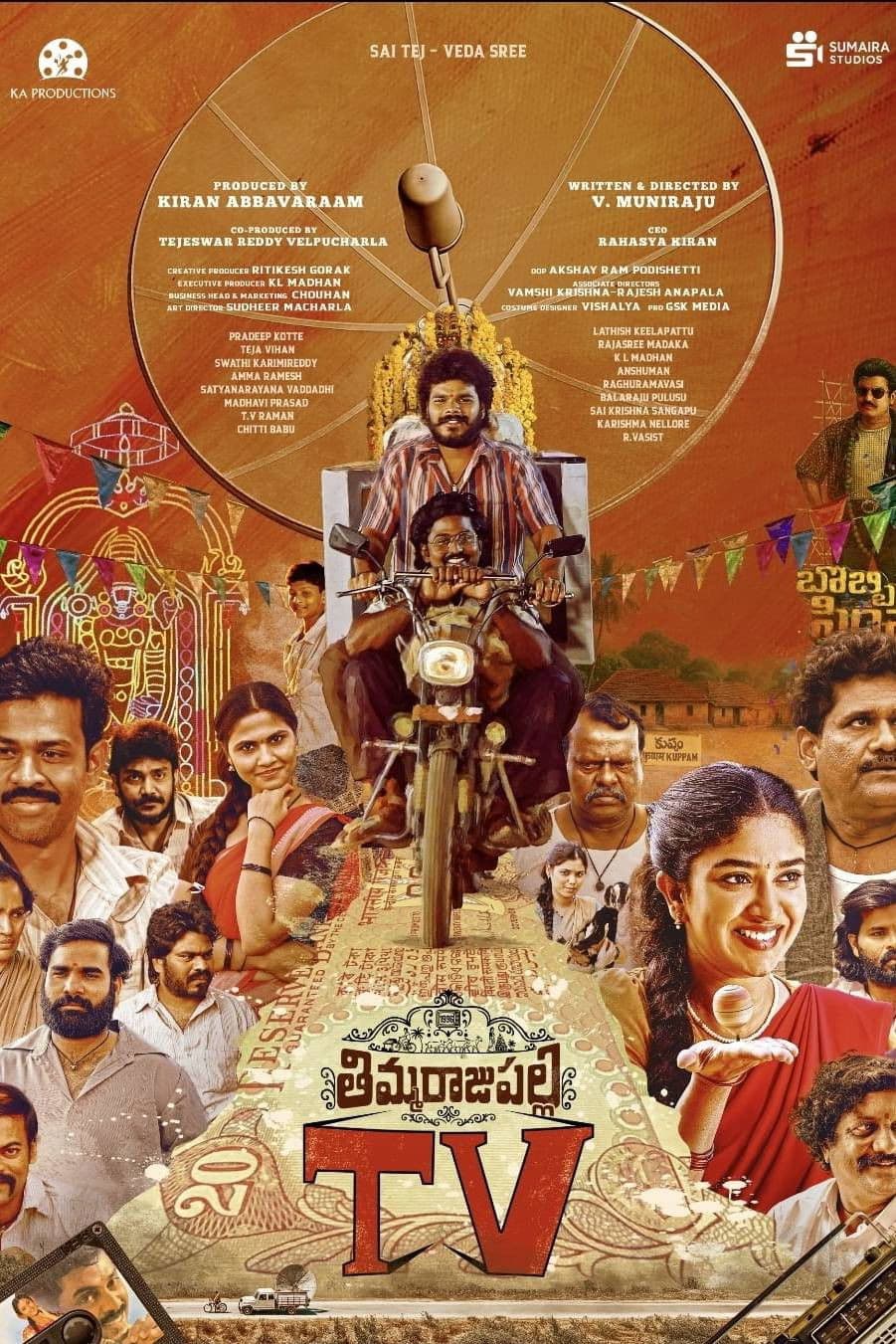
V Muniraju
Critic Scores
Overview:
Thimmarajupalli TV is the kind of film that makes you nostalgic for a childhood you may not have even had. Set in a 1996 Telugu village where a single television set is enough to split a community, debutant V. Muniraju has made something genuinely original: earnest to a fault, but original.
Story:
Satish (Sai Tej) is a lovable small-time rogue in the village of Thimmarajupalli, best known for arranging a communal TV every Maha Shivaratri so the whole village can watch together. Things go sideways when Rajappa (Pradeep Kotte) becomes the first villager to own a personal TV, bruising the headman's ego and triggering a bitter feud. After the television mysteriously disappears following a clash between Satish and Rajappa, Satish is fingered as the main suspect. The village council gives him two weeks to prove his innocence: and what starts as a love story becomes a whodunit about pride, jealousy, and what a community owes its own.
What Works:
Pradeep Kotte is the film's secret weapon. His Rajappa is not a villain: he's a man whose ego keeps tripping over his better instincts. The scene where he faces the village council without his usual bluster is quietly devastating.
The Maha Shivaratri communal TV sequences are the emotional heartbeat of the film. Families squeezing into the courtyard, arguments about which channel to watch, kids perched on walls: Muniraju clearly remembers this world, and it shows.
Sai Tej holds his own, especially in the mother-son scenes where Satish's desperation to restore his name hits harder than any mass-hero monologue would. Sincere debut.
The 1996 production design is meticulous. Period-accurate TV sets, clothing, interiors: whoever handled the art department deserves a separate mention. This looks and feels like a real village from that era, not a set.
Veda Jalandhar brings genuine warmth to Sharada. The chemistry with Sai Tej is understated and sweet: old-school, the way rural romances actually were.
What Doesn't:
The first half drags noticeably. Muniraju loves his world so much that he forgets to move the plot forward. There are stretches where atmosphere replaces story, and at 165 minutes, you feel every one of them.
The second half needed sharper urgency. This is a whodunit: there should be mounting pressure. Instead, the narrative keeps taking detours right when it should be tightening the screws.
A few supporting characters feel sketched rather than drawn. In a film that's all about community, some faces in the ensemble could have used one more scene to breathe.
Technical Aspects:
Vamsikanth Rekhana's background score is genuinely the film's most consistent achievement. Telugu360 called it a highlight of the entire film and they're not wrong. It's earthy, melancholic, and knows when to be quiet. Akshay Ram Podishetti's cinematography wraps the village in golden-hour warmth without going full Instagram filter about it; the frames feel lived-in. Production values are neat and punching above their ₹12–15 crore budget weight.
What the Audience Is Saying:
Premiere shows drew decent, positive early reactions: family audiences in particular seem to connect with the nostalgia of the shared-TV era. The word on social media is that Pradeep Kotte is walking away with the film's biggest applause, and the climax is getting specific praise. OTT platforms reportedly picked this up before release, which tells you the makers always knew this film's real home is a quiet Sunday afternoon.
Athreya's Verdict:
Kiran Abbavaram has produced something with actual soul for his debut, a film that recalls a time when one television set could make or break a village's peace. Muniraju's love for Thimmarajupalli is real, but love alone doesn't fix a screenplay that needs editing as much as it needs affection. Watch it for Pradeep Kotte, stay for the BGM, forgive the slow stretches, this one is best enjoyed like the chai at a village festival: lukewarm in parts, but the company makes it worthwhile.